GRAnada
andalusia, spain
july 19-23, 2008


GRAnada
andalusia, spain
july 19-23, 2008

Granada in the southern province of southern Spain known as Andalusia, was first settled by the Moors in the 8th century. Between 1238 and 1492, it was a cultural and commercial center under the rule of the Nasrid dynasty, attracting artisans, merchants, scholars, scientists, who all contributed to the international reputation of the city. Granada was the last moorish stronghold in the Christian military push to reclaim Al Andalus, the arab name for the territory. Because of the rich history of moorish invasion and settlement, Granada can claim some of the best examples of moorish architecture in all of Spain. In 1492, the Catholic Monarchs, Fernando of Aragón and Isabel of Castile united the Spanish and re-conquered Granada. In the same year, they backed Christopher Columbus on his voyage to the Indies, which resulted in the discovery of the New World, and a cache of treasure from the Americas which enriched the Spanish position on the continent. The result: Granada and other Andalusian cities have some of the best examples of gold encrusted cathedrals in Spain. As a thriving twenty-first century city today, Granada has a population of approximately a quarter million people. The charm of the historic part of the city has not been disturbed by the more modern sections of the city where commerce thrives. The architecture in Granada, apart from its historic inheritance, combines modern, classical, baroque, and renaissance forms with moorish arches, windows, and other details. Narrow cobblestone streets, plazas, fountains, and hanging flowers make the city charming and livable. We thoroughly enjoyed our stay her, and managed to get my computer up and running to top it all off!
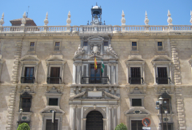
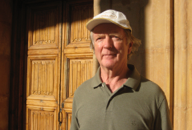
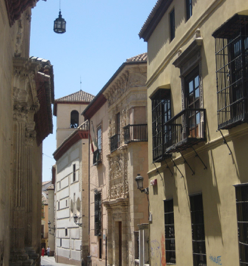
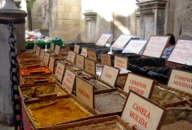
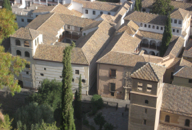
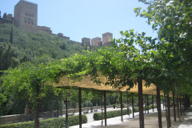
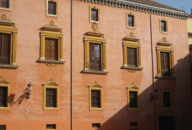
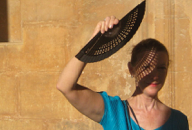
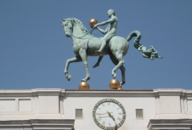
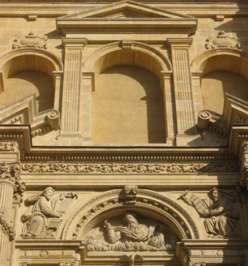
PHOTOS: Left Column: 1. Sculpture crowning Granada’s City Hall. 2. Jourdan with fan at the Palacio Carlos V. 3. The Alhambra looms large above the The Albaiciín district and the Carrera del Darro, with charming tapas restaurants along the Rio Darro. 4. Charming architecture in the plaza adjacent to the Cathedral. Center, Top: The 16th century Renaissance façade of the Cathedral. Center, Bottom: A street along the Rio Darro in Granada. Right Column: 1. Renaissance façade of the Real Chancilleria, c. 1530, built by the Catholic Monarchs. 2. 3. Henry, in early morning tour mode, at the Palacio Carlos V. 3. Labeled boxes containing loose spices, sold near the Cathedral. 4. View of the Albaicín from The Alhambra.

Moorish History