“gothic” buddhist temple
wat nivet thamaprawat
chao praya river cruise, thailand
may 10, 2008


“gothic” buddhist temple
wat nivet thamaprawat
chao praya river cruise, thailand
may 10, 2008

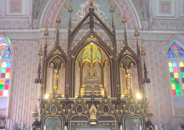
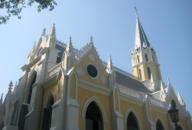
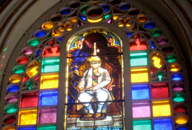
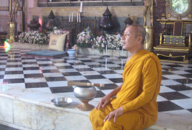
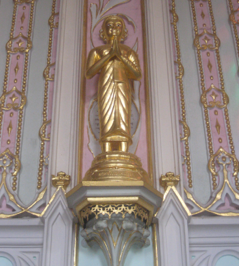
Docked alongside the white walls of these monastery grounds in late afternoon, we watched as young boys, students studying there, mowed the grass, weeded the water hyacinth from the riverbank, and swept the walks around the compound. The next morning, we toured the area behind the walls, only to discover Wat Nivet Thamaprawat, a most unusual Buddhist Temple. Built in the Gothic style, familiar to European churches, this perfectly proportioned structure houses religious images of the Buddhist faith. It is truly strange to see wall sconces, with golden figures of Buddhist monks placed upon them, where “Christian” figures would normally be found in buildings of this type. The gothic altar featured beautiful figures of Buddha. Hung from the ceiling above, was a multi-tiered golden umbrella in the traditional Thai style. In the center of a stained glass window, was the image of King Narai (1656-88) reigning during the height of Auytthaya, responsible for building diplomatic bridges between Thailand (Siam) and France in the 17th century. King Louis XIV’s ambition, to convert the populace of Siam to Catholicism, did not work, as is evidenced in this Buddhist temple. We received blessings from the monk, who prayed and chanted over us, sprinkling us with holy water. St. Joseph’s Church, on the Chao Praya River nearby, is similar in architecture, and has been the site of Catholic worship in this country for over 300 years.
PHOTOS: Upper Left: The Buddhist temple, exterior. Lower Left: Interior of facing the altar. Center: Detail, wall sconce with Buddhist figure. Upper Right: Stained glass window with King Narai in the central panel. Lower Right: Buddhist monk, who blessed us, in the Gothic temple, Wat Nivet Thamaprawat.

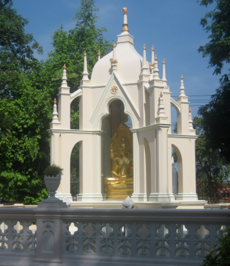
European Influence in the Court of Siam